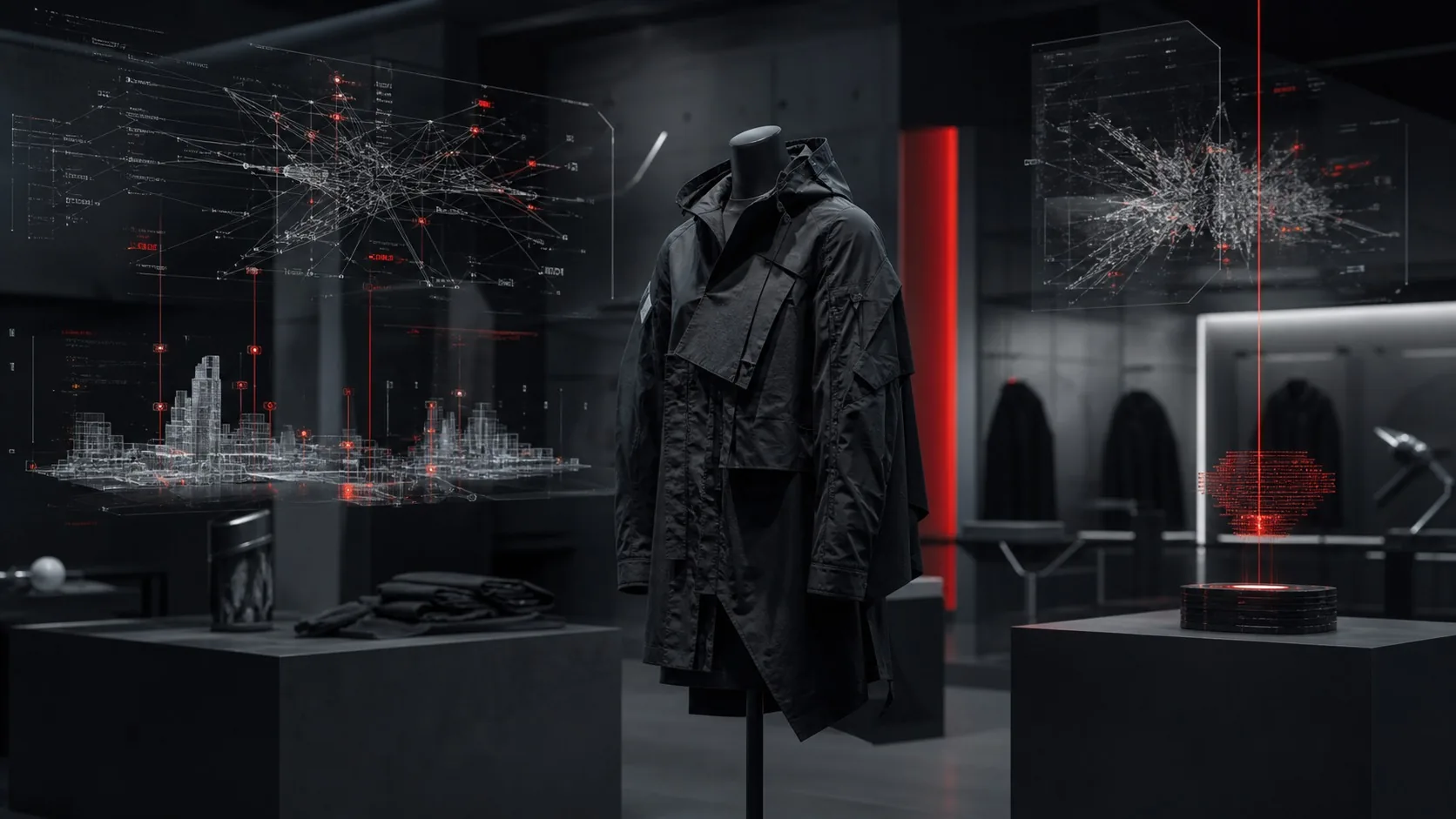
AI surveillance is advancing quickly because cameras, models and storage systems are becoming cheaper, smaller and more connected. The result is not one single surveillance machine. It is a distributed environment where recognition, prediction and automation appear across retail, transport, workplaces, housing, entertainment and public infrastructure.
Design cannot stop this shift alone. But design can decide whether products exploit fear, ignore reality or help people understand the systems around them.
What is advancing?
The most important change is the move from passive recording to automated interpretation. Older cameras stored footage for later review. Newer systems can detect objects, classify movement, flag behavior, estimate demographics, identify products or connect events across multiple sensors.
At the same time, edge computing allows analysis to happen closer to the camera. Cloud systems allow datasets to be connected. Generative AI makes interfaces easier to query. These changes make surveillance more scalable and less visible.
Why fashion should care
Fashion is a public technology. It covers the body, shapes movement and communicates identity. If public space becomes more computational, fashion becomes part of the interface. Technical clothing in particular has a responsibility to address this honestly because it already borrows language from systems, protection, mobility and performance.
The wrong response is fear marketing. The right response is informed design: materials, silhouettes, digital features and storytelling that help customers understand agency in a machine-readable world.
Responsible design responses
- Transparency: explain what digital product features do and what data they do not collect.
- Minimal data: use NFC, opt-in ownership profiles and product IDs only where they create clear value.
- Durability: build garments that resist disposability, because waste is also a systems problem.
- Human control: let customers opt into digital experiences instead of forcing them.
- Critical storytelling: discuss AI and surveillance without giving dangerous instructions or false promises.
The role of aesthetics
Aesthetics matter because they make invisible systems emotionally legible. A red signal line, a geometric eye or a matte black shell can express awareness without pretending to be armor. The best design does not shout “future.” It makes the future easier to inhabit.
DUZ uses this language to connect engineering and restraint. The clothes are not costumes for a dystopia. They are objects for people who understand that the city has changed and want to move through it with clarity.
How to read these systems without panic
A useful way to think about AI visibility is to separate three layers: capture, interpretation and consequence. Capture is the sensor layer: cameras, phones, scanners and networked devices. Interpretation is the model layer: software that detects objects, estimates categories or compares patterns. Consequence is the institutional layer: what a company, platform, landlord, retailer or government does with the interpretation.
Most public conversations collapse these layers into one vague idea of surveillance. Good design should do the opposite. It should make the layers easier to understand. A garment cannot control every sensor in the city, but a brand can be honest about its own digital systems, avoid unnecessary data collection and build products that encourage customers to think critically about visibility.
Why this belongs to luxury rather than novelty
Luxury is often misunderstood as decoration or price. At its best, luxury is disciplined decision-making: better materials, fewer compromises, longer life, clearer provenance and deeper meaning. AI-era fashion needs that discipline because the subject is too serious for gimmicks. If a brand uses the language of surveillance, recognition or adversarial design, it must avoid theatrical claims and focus on durable value.
For DUZ, the value is a combination of material intelligence and cultural intelligence. A product should feel good, last long, photograph well, move naturally and carry a point of view. The article topics on this blog are not separate from the clothing; they are the research layer behind the objects.
What customers should expect from AI-aware fashion
Customers should expect clarity. If a product uses NFC, the brand should explain what the chip does. If a collection references machine vision, the brand should explain whether it is symbolic, aesthetic or functional. If a garment is limited, the serial system should support authenticity and resale without invasive tracking. If a brand speaks about surveillance, it should respect safety and not turn fear into a sales tactic.
This is the standard DUZ is building toward: technical clothing with transparent language, precise construction and a strong ethical boundary. The point is not to escape the future. The point is to enter it with better objects and better questions.
Conclusion
The advancement of AI surveillance demands a mature design response. Brands should not promise invisibility, nor should they ignore machine vision. They should build products with transparency, agency, provenance and material seriousness. That is where DUZ positions Engineered Evolution.